Top 10 Photography Websites You Must Follow
The photography websites you follow can shape how quickly you improve. The right resources help you understand your camera, develop your visual judgment, discover outstanding work, and handle the practical side of photography. The wrong ones fill your browser with recycled gear lists and shallow advice.
This list brings together ten useful photography websites, each with a distinct strength. Some are best for camera reviews, some for lighting or technique, and others for inspiration and photographic culture. Together, they offer a balanced set of resources for beginners, enthusiasts, and working photographers.
1. Digital Photography Review
Digital Photography Review, often called DPReview, is one of the best-known resources for camera and lens information. Its reviews typically examine image quality, autofocus, handling, menus, video features, and real-world performance rather than relying only on a specification sheet.
The site is particularly useful when you are comparing cameras. Side-by-side sample images and detailed discussions of strengths and limitations can help you decide whether an upgrade will solve a genuine problem. Older reviews are also valuable because they explain how previous generations of cameras perform and what features are worth prioritising.
Use DPReview to research a purchase, but do not treat any review as a substitute for considering your own needs. A camera that suits wildlife photography may be unnecessary for street photography or family pictures.
2. PetaPixel
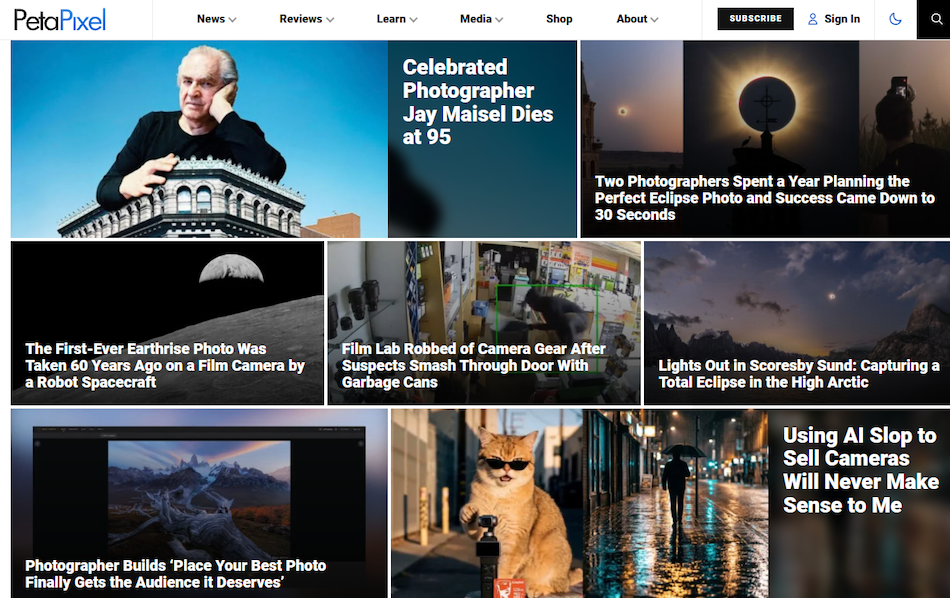
PetaPixel covers photography news, equipment, industry developments, photographer profiles, and practical advice. It is a useful place to check when you want to know what is happening across the photography world without following many separate publications.
The site also explores subjects such as copyright, image licensing, artificial intelligence, editing software, and the business challenges faced by photographers. That broader coverage makes it relevant beyond camera announcements.
As with any news-led website, the value of individual articles varies. Use it to spot subjects worth investigating, then check important technical or legal claims against primary documentation and current professional guidance.
3. 500px
500px is a photography community and portfolio platform with work from photographers across many genres. Its galleries can provide a useful source of visual reference when you want to study how other photographers approach landscape, portrait, macro, travel, wildlife, or architectural photography.
Do not simply scroll past the images you like. Ask why a photograph works. Look at the direction and quality of light, the position of the subject, the use of negative space, the colour palette, and the moment chosen by the photographer. This turns an inspiration feed into a practical composition exercise.
Online galleries can also expose you to trends, but popularity is not the same as quality. Use the platform to broaden your visual vocabulary rather than imitate every style that receives attention.
4. Fstoppers
Fstoppers publishes tutorials, equipment coverage, behind-the-scenes features, and articles about the business of photography and video. Its practical content is especially relevant if you are moving from personal projects towards paid work.
You can find guidance on lighting, studio setups, portrait sessions, workflow, pricing, client relationships, and portfolio presentation. Behind-the-scenes articles are useful because they reveal the decisions that sit behind a finished image, including the role of modifiers, location, assistants, and post-processing. Approach opinion-based articles as starting points rather than universal rules. Photography has many workable methods, and the best approach depends on your genre, budget, clients, and preferred way of working.
5. Digital Camera World
The Digital camera world is a comprehensive all-rounder delivering massive buyer guides, event coverage, and practical shooting tricks. It serves as an ultimate all-in-one resource, seamlessly bridging the gap between highly technical gear analysis and creative skill development. The platform is widely celebrated for its massive, regularly updated buying guides that help everyone from complete beginners to seasoned professionals select the perfect cameras, lenses, and editing software.
Beyond product reviews, the site delivers a steady stream of daily industry news, inspirational portfolios, and practical, step-by-step tutorials covering shooting techniques and digital post-processing. Because it caters to all skill levels and camera brands, it is a uniquely versatile, accessible hub for anyone looking to improve their photographic craft.
6. Strobist
Strobist, created by photojournalist David Hobby, is one of the most useful free resources for learning off-camera flash. Its Lighting 101 and Lighting 102 lessons introduce the principles of portable lighting through practical, accessible exercises.
The tutorials cover subjects such as flash direction, light quality, exposure, modifiers, and working with small flashes away from the camera. The approach encourages experimentation with modest equipment rather than suggesting that better results always require an expensive studio.
Even photographers who mostly use natural light can benefit from studying flash. Learning how artificial light behaves improves your ability to recognise direction, contrast, softness, and colour in any environment. The archive is extensive, so work through it gradually and practise each idea before moving on.
7. Magnum Photos
The Magnum Photos website is an important resource for documentary, editorial, and fine-art photography. The agency represents photographers whose work spans subjects, countries, and generations, giving visitors a large archive of carefully edited photographic projects.
It is particularly valuable for studying sequencing and visual storytelling. Instead of judging one image at a time, look at how a body of work establishes a subject, develops an atmosphere, and creates connections between photographs.
Take time to read the accompanying essays and background material where available. Context can reveal the photographer’s intentions, working process, and relationship with the people or places depicted. The site is useful for anyone who wants to make more meaningful documentary or personal work.
8. Photography Life
Photography Life offers tutorials on camera technique, exposure, focusing, composition, and post-processing. Its beginner-friendly explanations can also help more experienced photographers revisit concepts they learned incompletely or applied by habit.
Topics such as histograms, metering, depth of field, focus modes, and RAW processing are explained in a structured way. The site also publishes equipment reviews and articles about editing workflows, making it useful when you want to connect camera settings with the final image.
Use its tutorials as a foundation, then test the advice with your own camera and subjects. Settings that work well for a static landscape may be unsuitable for fast-moving wildlife, dim interiors, or candid portraits.
9. LensCulture
LensCulture focuses on contemporary photography, photo essays, interviews, exhibitions, festivals, and awards. It is a strong choice for photographers who want to explore photography as a visual language rather than only as a technical discipline.
The work featured there often extends beyond familiar approaches to subject, sequence, materials, and presentation. Studying it can help you move away from making isolated attractive images and towards developing a coherent project with a clear point of view.
LensCulture can also be useful when researching competitions, exhibitions, and opportunities for photographers. Check the rules, fees, rights arrangements, deadlines, and eligibility requirements for each opportunity independently before submitting work.
10. Cambridge in Colour
Cambridge in Colour is a technical reference site for photographers who want to understand how photographic processes work. Its tutorials explore subjects including exposure, depth of field, diffraction, colour, digital sensors, RAW files, and printing.
The explanations often go beyond a list of camera settings and describe the underlying principles. That makes the site especially helpful when a concept still feels confusing after watching a short tutorial.
It is not a daily photography news site, and that is part of its value. Bookmark the relevant pages and return to them whenever you need to understand a technical problem. A solid grasp of the principles will help you make better decisions across different cameras and editing programs.
How to Use Photography Websites Effectively
Following ten websites can quickly become overwhelming. You do not need to read everything. Choose resources according to your current goal and create a simple routine.
- Research purchases carefully: Compare independent reviews with manufacturer specifications, hands-on experience, and the needs of your own photography.
- Build a learning queue: Save one tutorial at a time and practise it before collecting more advice.
- Study photographs actively: Write down what you notice about light, composition, timing, colour, and editing instead of passively scrolling.
- Balance news with archives: Spend some time on current articles and some time with long-form tutorials, photo essays, and historical work.
- Check commercial context: Some photography sites include affiliate links, sponsored material, or opinions from contributors with different priorities. Read critically.
- Keep shooting: Every lesson should lead to an experiment, assignment, or personal project.
Other Photography Resources Worth Exploring
The ten sites above cover a broad range of needs, but your ideal photography reading list will depend on your interests. British Journal of Photography offers coverage of contemporary and editorial photography. Shotkit is worth browsing if you enjoy learning how photographers organise their equipment and working kits.
Local camera clubs, museum collections, library archives, software documentation, and reputable photography books can be just as valuable as websites. Online advice is convenient, but a varied set of references will expose you to more approaches and reduce the risk of following one narrow set of rules.