5 Essential Lenses Every Photographer Needs in Their Bag
Building a camera bag can become expensive quickly, especially when every lens seems to promise a different kind of creative freedom. The good news is that new photographers do not need a shelf full of glass to cover most everyday subjects. A carefully chosen set of five lenses can teach you how focal length, aperture, perspective, and working distance affect an image.
The right choices depend on your camera system, budget, and interests, but these five lens types form a practical starting point for portraits, landscapes, travel, street photography, wildlife, events, and close-up work. You may not buy them all at once—and you may eventually discover that one or two suit you far better than the others.
1. A standard zoom for everyday photography
A standard zoom is often the most useful first lens because it covers a flexible range of common focal lengths. On a full-frame camera, that usually means something in the region of 24–70mm. For APS-C and Micro Four Thirds cameras, look for a lens with an equivalent range that covers similar wide-to-short-telephoto perspectives.
At the wide end, you can photograph interiors, groups, travel scenes, and environmental portraits. At the longer end, you can make a subject stand out more clearly, frame a head-and-shoulders portrait, or isolate a detail without physically moving closer.
Why it belongs in a new photographer’s bag
- It reduces lens changes: useful when photographing events, travel, or changing subjects outdoors.
- It teaches focal length: zooming between wide and telephoto views helps you understand how framing changes.
- It handles unpredictable situations: you can move from a group photograph to a candid portrait without changing equipment.
Many standard zooms use a variable maximum aperture, meaning the widest available aperture becomes smaller as you zoom in. That is not a problem for daylight photography, but it can matter indoors or at dusk, when you may need a higher ISO or slower shutter speed. A constant-aperture zoom can be useful if you regularly work in low light, although it is often larger, heavier, and more expensive.
Use the standard zoom as your general-purpose lens, but avoid treating it as a substitute for learning composition. If a photograph feels flat, try changing your position rather than simply zooming. Walk closer, step back, or look for a different angle.
2. A fast 50mm—or its camera-system equivalent—for portraits and low light
A fast standard prime is one of the most useful lenses for learning photography. The classic choice is a 50mm lens on a full-frame camera. On an APS-C body, a lens around 30–35mm often gives a comparable field of view, while Micro Four Thirds users may look closer to 25mm.
Prime lenses have a fixed focal length, so they do not zoom. That limitation is valuable: you compose by moving your feet, changing your distance from the subject, and paying closer attention to the frame. A wide maximum aperture—such as f/1.8 on many affordable primes—also allows more light to reach the sensor than a typical kit zoom at its longer end.
What makes a fast prime so useful?
In dim conditions, a wider aperture can help you maintain a faster shutter speed or keep ISO lower. For example, when photographing a person indoors near a window, a fast prime may make it easier to avoid motion blur while creating a softly blurred background.
That background blur depends on more than aperture. Subject distance, camera-to-subject distance, focal length, and the distance between the subject and background all play a role. Positioning your subject several metres in front of a background will generally produce more separation than placing them directly against a wall.
A 50mm-equivalent lens is also useful for everyday documentary work, food photography, details, and natural-looking portraits. It is not always the best option for a very tight indoor room or a large group, but it encourages deliberate framing and can produce a more intimate perspective than a wide-angle lens.
3. A wide-angle lens for landscapes, architecture, and interiors
A wide-angle lens captures a broader field of view than a standard lens. On full frame, this usually means a focal length of roughly 14–35mm, depending on how wide you need to go. For other formats, choose based on the equivalent field of view rather than the number printed on the lens.
Wide lenses are essential when you cannot move farther away from your subject. They are useful for landscapes, architecture, interiors, city scenes, environmental portraits, and astrophotography. They can also make a small room feel more spacious, although that effect comes with a risk: careless framing can stretch people and objects near the edges of the frame.
How to use a wide lens well
Wide-angle photography benefits from a strong foreground. A rock, doorway, patch of texture, or leading line close to the camera can give the image depth. Simply pointing a wide lens at a large scene often produces a photograph with plenty of information but little visual structure.
Keep an eye on the edges of the frame. A person standing near a corner may appear wider or distorted, particularly at very short focal lengths. For portraits, place important features closer to the centre or use a slightly longer focal length if you want a more natural rendering.
When photographing buildings, tilting the camera upward can make vertical lines converge. That effect can be used creatively, but if you want straight architectural lines, keep the camera level and leave room to crop—or use a lens and camera position designed for architectural correction.
4. A telephoto zoom for distant subjects and compressed landscapes
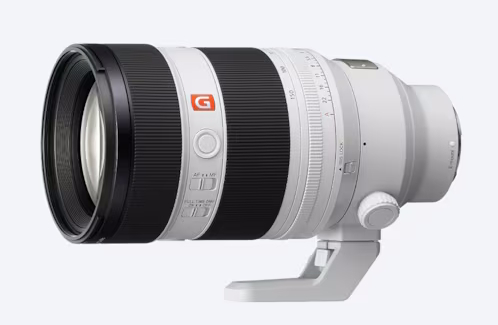
A telephoto zoom gives you reach when your subject is too far away to approach. A common choice is a lens covering a range from around 70mm to 200mm or beyond on full frame, with equivalent options available for smaller sensors.
This is the lens to reach for when photographing wildlife, sports, performances, candid moments, and details in a distant landscape. At longer focal lengths, small changes in camera position and framing make a large difference, so the lens also teaches patience and precision.
Telephoto lenses are not only for faraway subjects. They can create flattering portraits by allowing you to stand farther from the person, and they can compress the apparent distance between foreground and background. For example, a line of trees on a distant hillside may appear more tightly layered at a longer focal length than it would with a wide lens.
Practical considerations
Long lenses magnify camera shake, and moving subjects can be difficult to keep in the frame. Use a shutter speed fast enough for the subject and focal length, then adjust ISO or aperture as needed. Image stabilization can help with your own movement, but it does not freeze a running athlete or a bird in flight.
Size and weight matter here. A lens that stays at home because it is inconvenient is less useful than a lighter model with a slightly shorter range. If you mainly photograph family activities, travel, or occasional outdoor events, portability may be more important than maximum reach.
5. A macro lens for close-up detail
A macro lens is designed to focus at short distances and reproduce small subjects at a high level of detail. It can reveal the texture of a flower, the surface of an insect, jewellery, objects, food, or small products. Many macro lenses can also serve as excellent portrait lenses, particularly at moderate focal lengths.
True macro capability is often described using a reproduction ratio. A 1:1 lens can project a subject onto the camera sensor at life-size reproduction, although the exact capabilities vary between lenses and camera systems. You do not need to photograph insects to benefit from one: close-up work is a useful way to practise focus, lighting, background control, and composition.
What to know before buying a macro lens
Depth of field becomes extremely shallow at close distances, even when you stop down the aperture. If you photograph a flower close to the minimum focusing distance, focusing on one part may leave the rest noticeably soft. A tripod, careful focusing, and controlled lighting can help, but macro photography often requires more precision than beginners expect.
Longer macro lenses provide more working distance between the front of the lens and the subject. That can be helpful with insects or subjects that are easily disturbed, while a shorter macro lens may be easier to use for objects, food, and tabletop scenes.
How to choose your first five lenses
You do not need to purchase these lenses in a fixed order. Start with the type of photography you actually enjoy. A travel photographer may get the most value from a standard zoom and a wide-angle lens. Someone interested in portraits might choose a fast prime before buying a telephoto. A nature enthusiast may prioritise a telephoto zoom and macro lens.
Before buying, check compatibility with your camera mount and sensor format. Compare the equivalent field of view, not only the stated focal length. Consider maximum aperture, autofocus behaviour, minimum focusing distance, weather sealing if relevant to your work, and the lens’s size and weight.
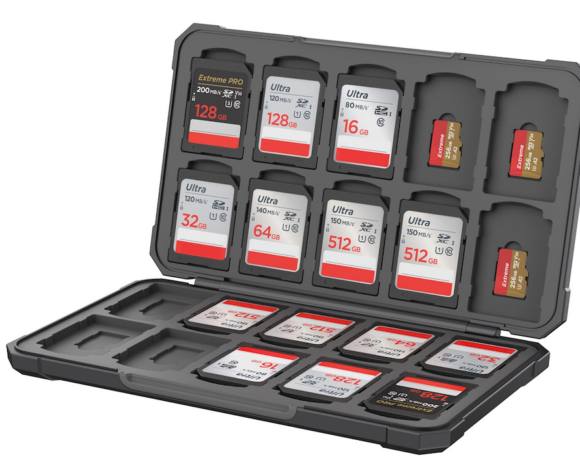
Most importantly, leave room in the budget for practical essentials such as spare batteries, memory cards, a camera bag, and a way to protect the front element. The best lens collection is not the one with the most options; it is the one that helps you photograph more often and make clearer decisions when you are behind the camera.