Sony a7V Camera Review
Sony’s a7-series has been the go-to answer to the “which full-frame camera should I buy” question for years, and the a7V arrives as the latest refinement of that formula. It sits in the middle of Sony’s full-frame lineup, aimed at photographers who want more autofocus intelligence and speed than the previous generation without stepping up to the price and specialized focus of Sony’s flagship sports and resolution-first bodies.
This review looks at how the camera behaves across real shooting situations rather than simply what’s printed on a spec sheet. Exact pricing and some finer specifications can shift between regional announcements and firmware updates, so treat any figures as a starting point and confirm them against the official listing before buying. What follows is a practical look at handling, autofocus, image quality, video, and everyday reliability.
Design and Handling
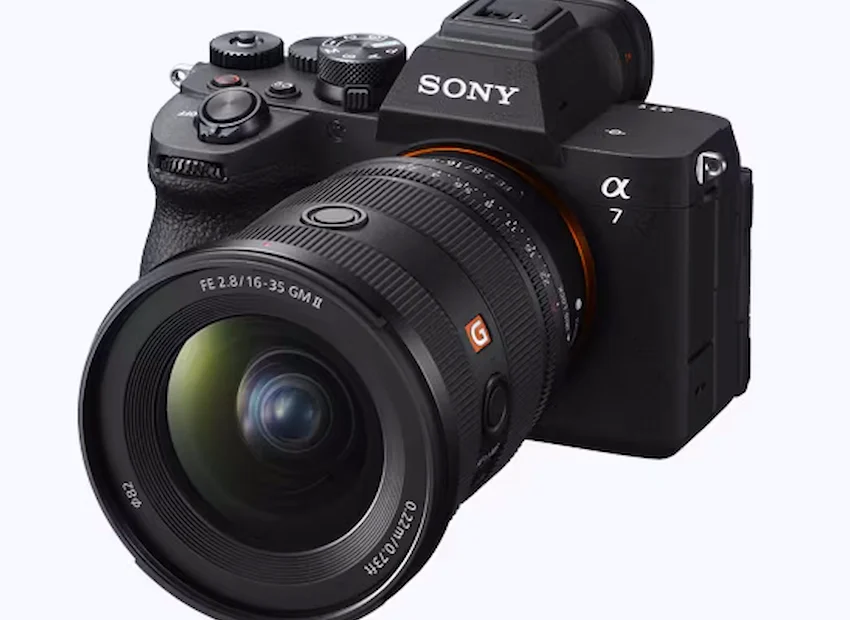
Pick up the a7V and it feels immediately familiar if you’ve used a recent Sony body. The grip has been reshaped to be deeper and more contoured, which matters more than people expect once you’ve carried the camera with a heavy lens, such as a 24-70mm f/2.8 zoom, for several hours straight. Muscle memory from older a7 bodies transfers over almost completely, since the button layout hasn’t been reinvented.
A few small but welcome changes stand out in daily use:
- Custom buttons have a more tactile, clicky response, useful when shooting with gloves.
- The exposure compensation dial is now fully customizable, so it can be reassigned to ISO or aperture control.
- The power switch has a firmer detent, reducing the chance of accidental activation inside a bag.
- Weather sealing around the card door and battery compartment feels tighter, though nobody should treat that as a substitute for actual care in wet conditions.
A More Flexible Screen
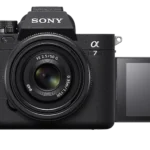
The rear monitor borrows a hybrid design from Sony’s higher-end models, combining a traditional tilt mechanism with a side-opening vari-angle hinge. This setup works well for landscape photographers who prefer tilting the screen on-axis with the lens, and just as well for videographers or portrait shooters who need to flip it out to the side. It’s also brighter, making composition easier in direct sunlight, and genuinely useful for low-angle shots, overhead framing, or anyone photographing a child at ground level.
Menus and Setup
Sony’s menu system has quietly become more usable over the last few camera generations, and the a7V continues that trend. It isn’t the simplest system on the market, and some redundant paths still feel like leftovers from older firmware, but it no longer feels like solving a puzzle mid-shoot. Spending a few minutes assigning custom buttons before a paid job — subject recognition, focus area, drive mode, silent shooting — pays off quickly once you’re working under pressure.
Autofocus: The Standout Feature
This is where Sony has consistently led the category, and the a7V doesn’t break that streak. Subject recognition has been expanded to reliably track people, animals, birds, insects, and vehicles, and it goes beyond simple face detection by recognizing body shape and posture. If a subject turns away from the camera or is briefly obscured, focus tends to stay locked on the head or torso rather than jumping to the background.
In practical terms, this means fewer missed frames when a subject looks down, turns sideways, or moves through uneven light. For portrait and wedding work, eye detection stays locked even as a subject moves closer to the lens or turns their head. For street photography, it’s fast enough to catch fleeting moments without pre-focusing manually. Low light does cause slightly more hunting, but recovery is quick, without the frustrating refocus loops that plagued earlier mirrorless generations.
The faster sensor readout also improves burst shooting and electronic shutter performance, which is useful for weddings, dance performances, kids and pets in motion, or any situation where a fast, silent shutter matters. That said, a high burst rate doesn’t replace timing — long bursts create more editing work and fill cards quickly, so it’s worth reserving the fastest settings for the actual peak of the action rather than holding the shutter throughout.
Image Quality
Color out of camera leans toward Sony’s familiar character: accurate skin tones without needing heavy correction, and natural-looking greens rather than an oversaturated cast. Dynamic range offers real flexibility in post-production, allowing shadows to be pulled up substantially in high-contrast or backlit scenes before noise becomes distracting.
High ISO performance holds up well for a camera in this class. Grain appears gradually rather than suddenly and stays relatively fine as you push further into low light, giving event photographers real usable margin in dim reception halls or evening venues. It isn’t a night-vision camera, and very dark environments still demand careful exposure and steady technique, but it’s a comfortable performer for indoor events, evening street work, and available-light portraits. A fast prime lens will often make more difference here than pushing ISO to its limits.
Video Performance
The a7V handles rolling shutter better than earlier a7 models, which matters for handheld shooting and quick pans. Footage looks clean out of camera, and internal 10-bit color depth gives room for grading in post. Color science between stills and video is close enough that intercutting the two in a single project doesn’t require a major grading detour.
Practical video features include oversampled 4K recording from the full sensor width, high-frame-rate options for slow motion, active stabilization that pairs with in-body sensor shift, and professional picture profiles for both maximum dynamic range and a ready-to-use cinematic look. Heat management has also improved, allowing for extended recording without sudden shutdowns during typical event or interview work, even without an internal fan.
For a one-person creator, the headline resolution numbers matter less than reliable autofocus, stabilization, a flexible screen, and simple exposure controls — all of which the a7V delivers well enough to let a portrait photographer add behind-the-scenes clips or a small business shoot product demos without buying a separate cinema camera. Dedicated video-first shooters should still compare this against Sony’s more cinema-focused lines before committing.
Battery Life and Storage
Battery life comfortably covers a full day of mixed shooting — stills, some video clips, and plenty of screen review — though heavy video recording and high-refresh-rate viewfinder settings will drain it faster. Carrying a spare battery is cheap insurance against missing a moment during a ceremony, speech, or interview.
Dual card slots remain standard, and for paid work, setting the second card to simultaneous backup is worth the minor extra cost. Fast cards are recommended if you shoot long bursts of raw files or high-bitrate video, to keep the buffer clear.
Who Should Buy the Sony a7V
This camera makes the most sense for photographers who need one dependable body for varied work rather than a specialist tool.
- Wedding and event photographers who need dependable autofocus and dual-card backup.
- Portrait photographers who also shoot short-form video.
- Travel and street photographers wanting a flexible, all-round system.
- Parents and enthusiasts photographing kids, pets, and casual sports.
- Anyone upgrading from an older a7 II or a7 III, who will notice real improvements in handling and autofocus confidence.
It’s a thinner case for photographers who already own the immediate predecessor and rarely run into autofocus, speed, or video limitations, for anyone needing maximum resolution for large commercial prints or architecture, or for those shooting elite sports and fast wildlife professionally who need the fastest possible readout available. Sony’s E-mount lens lineup, including strong third-party options from Sigma and Tamron, is also worth factoring in — it’s a mature ecosystem that doesn’t box you into narrow choices.
Where It Falls Short
No camera is perfect. The menu system, while much improved, still requires setup time before a critical shoot. The default viewfinder refresh rate favors battery life over resolution, so the high-performance mode needs to be enabled manually for the best viewing experience. And price positioning puts the a7V in competition with excellent alternatives from Canon and Nikon, so brand loyalty alone shouldn’t be the deciding factor.
Final Verdict
The Sony a7V isn’t trying to be the most extreme camera in any single category. Its strength is covering a wide range of photography and video work without forcing major compromises in image quality, autofocus, speed, or portability. For many photographers, that kind of quiet reliability is worth more than a spec sheet designed to win a comparison chart.
If you’re due for an upgrade, compare it against your current camera based on the shots you actually miss rather than the features you admire on paper. What would it change on your next real shoot? Share your thoughts and upgrade plans in the comments below.