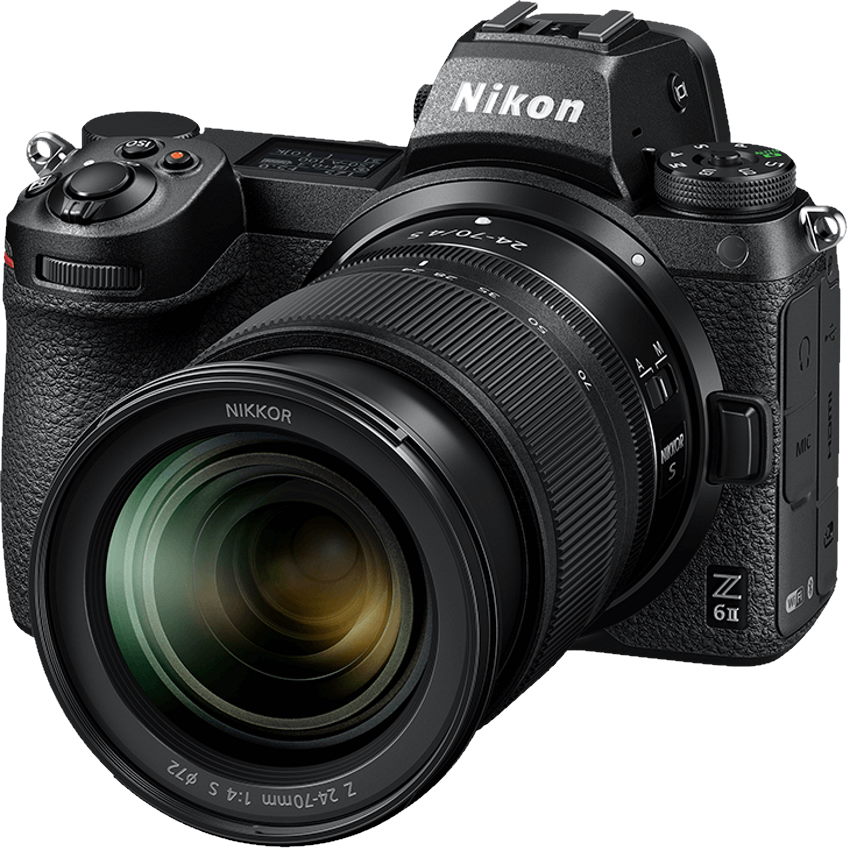
Pick the Right Camera Lens to Fit Your Project
Selecting a new camera body is an exciting milestone, but the lens you attach to it has a far greater impact on your final images and videos. The lens dictates your field of view, how close you can stand to your subject, how well the camera performs in dark environments, and how the background is rendered. It is the true creative engine of your camera system.
The ideal lens is not necessarily the most expensive model on the shelf, nor is it the one with the highest laboratory sharpness ratings. The best choice is the tool that matches the specific demands of your project, fits your camera body perfectly, and aligns with your personal style of working. This guide will help you navigate the technical specifications and focus on the practical factors that matter when you are out shooting.
Start With your Project
Lens shopping quickly becomes overwhelming when you begin by comparing focal length charts, maximum apertures, and online recommendations. It is much more effective to start with the actual work you plan to do. A lens that is perfect for tracking wild animals in an open field will be completely useless in a tight home studio, while a compact travel zoom may fail to deliver clean results during a dimly lit evening event.
Before you begin comparing models, ask yourself these practical questions:
- What is your primary subject matter: people, products, buildings, wide landscapes, sports, wildlife, or video interviews?
- Will you work mostly indoors under controlled lighting, outdoors in natural light, or in rapidly changing environments?
- How much physical control will you have over your distance from the subject?
- Are your subjects stationary, slow-moving, or fast and unpredictable?
- Do you frequently shoot in low-light situations without a tripod or flash?
- Will you carry your gear all day on foot, or will you work from a fixed tripod setup?
- Do you need to capture extreme close-up details, or do you require broad, sweeping views?
Answering these questions will point you toward a specific category of lens long before you have to worry about individual brand names or model numbers.
Understanding Focal Length and Crop Factor
Focal length, measured in millimeters, determines the angle of view of your lens. Shorter focal lengths provide a wider view of the scene, while longer focal lengths provide a narrower, highly magnified view that brings distant subjects closer.
However, the field of view you experience also depends on the size of your camera sensor. Focal lengths are traditionally discussed in relation to full-frame sensors, which match the size of classic thirty-five millimeter film. If you use a camera with a smaller sensor, such as an APS-C or Micro Four Thirds sensor, the image is cropped. This is known as crop factor.
For example, an APS-C sensor typically has a crop factor of one point five. This means a fifty millimeter lens attached to an APS-C camera will produce a field of view equivalent to a seventy-five millimeter lens on a full-frame camera. A Micro Four Thirds sensor has a crop factor of two, meaning a twenty-five millimeter lens will behave like a fifty millimeter lens. Always calculate this crop factor for your specific camera system before choosing a focal length.
Wide-Angle Lenses
Wide-angle lenses generally cover focal lengths from fourteen millimeter to thirty-five millimeter on a full-frame camera. They are the standard choice when space is limited or when you want to capture a vast scene. Common uses include real estate interiors, architecture, sweeping landscapes, environmental portraits, and handheld video work in small rooms.
A wide-angle zoom, such as a sixteen-to-thirty-five millimeter lens, offers excellent flexibility for travel and interior design work. However, you must be careful with perspective. Wide lenses stretch elements near the edges of the frame. If you place a person close to the edge, their proportions will look unnatural. Keep human subjects closer to the center of the frame unless you want to use that distortion for creative effect.
Standard Lenses
Standard lenses cover the middle ground, typically from thirty-five millimeter to seventy millimeter on full frame. This range closely matches the natural perspective of human vision, making these lenses incredibly versatile for daily use. A thirty-five millimeter lens is highly favored for documentary work and street photography, while a fifty millimeter lens is a classic choice for portraiture and general photography.
A standard zoom lens, such as a twenty-four-to-seventy millimeter, is often the most practical first upgrade for any photographer. It allows you to transition smoothly from a wide landscape shot to a tight portrait without needing to stop and swap lenses.
Telephoto Lenses
Telephoto lenses start around seventy millimeter and can extend to four hundred millimeter or more. They are designed for situations where you cannot physically get close to your subject, such as sports, wildlife, live stage performances, and candid events.
Focal lengths between seventy millimeter and two hundred millimeter are highly popular for portraits because they flatter the human face and isolate the subject beautifully. Longer lenses, like a one-hundred-to-four-hundred millimeter zoom, are essential for field sports and bird photography.
Telephoto lenses also create a visual effect known as background compression. While the physical perspective only changes when you move your body, a telephoto lens makes the background elements appear much larger and closer to your subject, creating a clean, professional look.
Macro Lenses
Macro lenses are engineered specifically for close-up photography. They allow you to focus on subjects just inches away from the glass, reproducing them at a one-to-one magnification ratio on the sensor. This makes them indispensable for photographing jewelry, food, flowers, small products, and intricate textures.
While a standard lens might let you get moderately close, a dedicated macro lens maintains extreme sharpness and detail at close range. Many macro lenses also make exceptional portrait lenses when used at normal distances.
Aperture and Depth of Field
The maximum aperture of a lens, indicated by the f-number, determines how much light the lens can gather. A smaller f-number represents a wider physical opening.
- f/1.2 to f/1.8: These are exceptionally fast lenses. They let in a massive amount of light, making them perfect for low-light environments. They also create an extremely shallow depth of field, which completely blurs the background to make your subject stand out.
- f/2.8: This is the professional standard for high-quality zoom lenses. It offers a great balance of low-light performance and shallow depth of field while maintaining excellent sharpness across the frame.
- f/4 to f/5.6: Lenses with these maximum apertures are generally smaller, lighter, and far more affordable. They perform beautifully in daylight, outdoors, or when using studio lighting and tripods.
You do not always need the fastest, most expensive aperture. Landscape photographers usually shoot at f/8 or f/11 to keep the entire scene sharp from front to back. Product photographers working with studio strobes also use narrower apertures. Only pay the premium price for an f/1.4 or f/1.8 lens if you plan to shoot in very dark settings or absolutely require that creamy, blurred background look.
Primes versus Zooms: Choosing Your Workflow
A prime lens has a single, fixed focal length. A zoom lens allows you to adjust the focal length across a specified range. Both have distinct advantages depending on how you prefer to work.
Prime lenses are generally smaller, lighter, and sharper than zooms at equivalent price points. Because they have a simpler optical design with fewer glass elements, they can easily offer very wide maximum apertures like f/1.8 or f/1.4. Working with a prime lens forces you to move your feet to frame your shot, which many creators find helps them develop a stronger sense of composition.
Zoom lenses offer unmatched convenience. When you are shooting a fast-paced event like a wedding or a sports match, you cannot ask the action to pause while you change lenses. A zoom lens lets you reframe instantly, ensuring you never miss a critical moment. For travel, a single high-quality zoom can replace three separate prime lenses, saving valuable space in your bag.
Crucial Features
Two lenses can share the exact same focal length and aperture on paper but perform completely differently in real-world scenarios. Look closely at these secondary features before making your decision.
Autofocus speed and noise are critical. If you shoot action, sports, or erratic wildlife, you need a lens with a fast, modern linear motor that can lock focus instantly. For video creators, a quiet autofocus motor is essential so that the camera microphone does not pick up clicking or whirring sounds during recording.
Image stabilization is another major factor. Built-in optical stabilization helps counteract the natural shake of your hands. This allows you to shoot at slower shutter speeds without getting blurry images, and it keeps handheld video footage looking smooth. While stabilization is helpful on any lens, it is absolutely essential on telephoto lenses where every tiny movement is magnified.
Physical build quality and weather sealing should not be overlooked. If you regularly shoot outdoors in dusty environments, light rain, or near saltwater spray, investing in a weather-sealed lens will protect your delicate electronics. Finally, check the minimum focusing distance. Some lenses cannot focus on anything closer than three feet, which can be highly frustrating if you want to capture close-up details of food or travel souvenirs.
Test Before You Buy
A lens can have glowing online reviews and still feel awkward or heavy on your specific camera body. Before making a major financial commitment, consider renting the lens for a weekend. This allows you to test the weight, balance, autofocus speed, and overall image quality in your actual working environment.
If renting is not an option, look into purchasing high-quality used gear from reputable dealers who offer warranties and return policies. Lenses hold their value remarkably well, and buying used is an excellent way to access professional-grade glass without paying the retail markup.
Ultimately, the best lens is the one that removes obstacles from your creative process. If your current lens cannot fit the whole room, look for a wider focal length. If you cannot get close enough to the action, choose a telephoto. If your images are blurry in low light, look for a wider maximum aperture. By focusing on your specific project needs rather than technical hype, you will find the perfect tool for your creative journey.