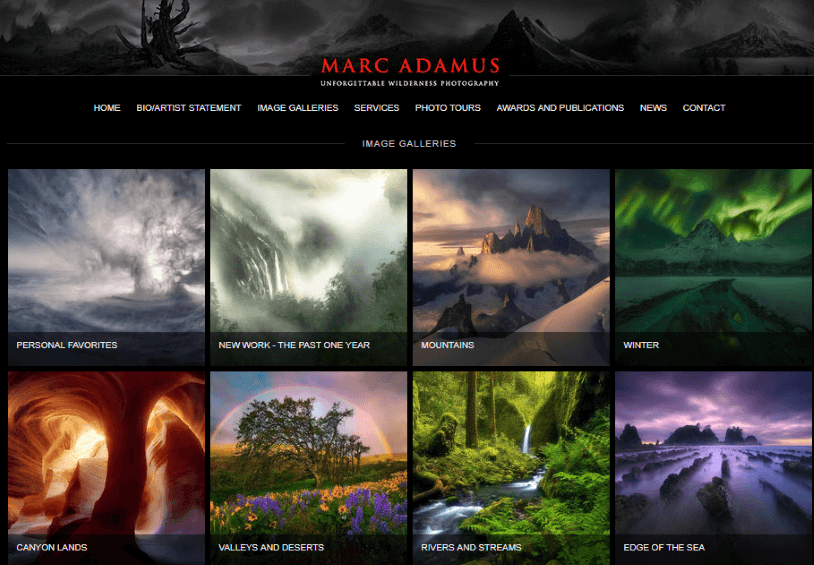
Marc Adamu’s Landscape Photography- Photographer inspiration
When it comes to landscape photography, few names resonate as strongly as Marc Adamus. Known for his breathtaking vistas and ability to capture nature’s raw beauty, Adamus has established himself as a true master of the craft. His work is more than just photography; it’s an invitation to see the world through his eyes. For photographers seeking inspiration, his images offer a rich tapestry of techniques and perspectives to explore.
The Art of Capturing the Sublime
Marc Adamus is renowned for his ability to capture landscapes that evoke emotion and wonder. His photographs often feature dramatic lighting, striking compositions, and an almost surreal quality that seems to transcend the boundaries of reality. But what makes his work truly extraordinary is his commitment to capturing the essence of the natural world.
Adamus often waits for the perfect conditions to achieve his signature style—opting for early mornings or late afternoons when the light is soft and golden. This dedication to timing is a reminder for photographers that patience is key. Waiting for the right moment can transform a good photograph into a great one.
Exploring New Perspectives
One of the standout aspects of Adamus’s work is his ability to find unique perspectives. He often ventures to remote locations, scaling mountains or wading through rivers to find the perfect vantage point. This adventurous spirit encourages photographers to step out of their comfort zones and explore new angles and compositions.
Consider experimenting with different focal lengths and camera positions. A wide-angle lens can capture the grand scale of a landscape, while a telephoto lens can isolate details that might otherwise be overlooked. By shifting your perspective, you can create dynamic compositions that draw the viewer into the scene.
Technical Mastery
Adamus’s technical expertise is evident in every photograph. He often employs techniques like long exposures to smooth out water surfaces or capture the movement of clouds, adding a sense of motion to his still images. Understanding and utilizing these techniques can vastly improve the quality of your own landscape photography.
Mastering Exposure and Composition
Proper exposure is crucial in landscape photography, and Marc Adamus’s work exemplifies this. Balancing the bright highlights of the sky with the darker foreground can be challenging. Using graduated neutral density filters or bracketing exposures for high dynamic range (HDR) images are effective ways to manage this balance.
Compositionally, Adamus often employs leading lines and the rule of thirds to guide the viewer’s eye through the frame. Whether it’s a winding river or a jagged mountain ridge, these elements help create a sense of depth and scale in his images.
The Power of Post-Processing
While capturing the perfect shot is essential, the power of post-processing should not be underestimated. Adamus is known for his meticulous editing, enhancing colors and contrasts to bring out the best in his images. This stage is where a photograph can truly come to life.
Using software like Adobe Lightroom or Photoshop, you can adjust exposure, contrast, and saturation to enhance the natural beauty of your shots. However, it’s important to maintain a balance—post-processing should enhance, not overpower, the original image.
Finding Your Own Voice
While it’s easy to be inspired by Marc Adamus, it’s crucial for photographers to find their own voice. Use his work as a starting point, but don’t be afraid to experiment and develop your unique style. Photography is a personal journey, and the most compelling images often come from those who bring their own perspective to the art.
Marc Adamus’s landscape photography is a masterclass in technique, patience, and vision. For any photographer looking to elevate their work, studying his images offers invaluable lessons. Remember to embrace the journey, seek out new perspectives, and let the beauty of the natural world guide your lens.
Photographers Website: Marc Adamus Photography