Nick Ut – Photographer inspiration
Nick Ut’s photography is a powerful reminder that a photograph can do more than describe an event. It can make distant suffering immediate, force difficult conversations, and remain in public memory for decades. For photographers, his work also offers practical lessons about timing, empathy, visual clarity, and the responsibility that comes with photographing people in crisis.
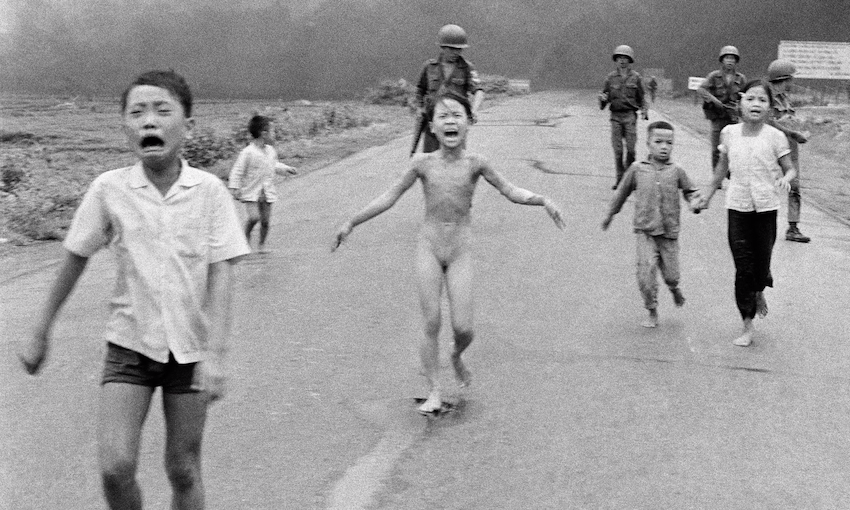
Ut is best known for the photograph commonly called The Terror of War, or simply the “Napalm Girl” photograph. Made in 1972 during the Vietnam War, the image shows children running along a road after a napalm attack near Trang Bang. At the centre is nine-year-old Kim Phuc, severely burned and fleeing with other children.
The photograph won the 1973 Pulitzer Prize for Spot News Photography and became one of the defining images of the twentieth century. Its impact did not come from elaborate lighting, unusual equipment, or a complicated composition. It came from being present, recognising the significance of an unfolding moment, and making a clear, emotionally direct picture.
Who was Nick Ut?
Nick Ut, whose full name is Huynh Cong Ut, worked as a photographer for The Associated Press. He began photographing during the Vietnam War while still young, following the example of his older brother Huynh Thanh My, who was also an AP photographer and was killed while covering the conflict.
Ut continued working as a photojournalist after the war, covering major events and working in different parts of the world. His career is often associated with conflict photography, but his importance extends beyond one famous frame. He represents a generation of photographers who worked under extreme pressure, often with limited opportunity to plan, repeat, or refine an image.
That context matters. The iconic photograph was not created as an isolated art project. It was made in a chaotic and dangerous news environment, where the photographer had to react quickly while also dealing with the human reality in front of the camera.
The photograph that changed how the world saw the war
On June 8, 1972, Ut photographed civilians escaping after napalm was dropped near Trang Bang. The picture is visually simple: a road recedes into the distance, smoke hangs over the scene, and a group of children runs toward the camera. Kim Phuc’s open-mouthed cry gives the photograph its emotional force, while the adults and soldiers farther back establish the wider context.
Several compositional choices make the image difficult to ignore:
- The subjects move toward the viewer. Their direction creates urgency and makes the scene feel immediate rather than distant.
- The road creates depth. Its lines guide the eye from the background toward the children in the foreground.
- The frame contains both individual pain and collective danger. Kim Phuc is the visual focus, but the surrounding children prevent the image from becoming a portrait detached from the event.
- The background remains readable. Smoke, road, and distant figures explain where the children have come from and why they are running.
There is no need to search for visual decoration in the frame. The photograph works because every major element supports the story. This is a useful lesson for any genre: when the subject is strong, an uncluttered composition often communicates more effectively than a visually busy one.
Why timing matters more than technical perfection
Many photographers worry about having the perfect lens, the cleanest background, or technically flawless exposure. Photojournalism frequently demands a different priority. A moment may last only a second, and the opportunity to make a meaningful picture may never return.
Ut’s image demonstrates the importance of recognising a meaningful gesture or arrangement as it happens. The children’s positions are not symmetrical, yet they form a strong visual group. Kim Phuc’s placement near the centre gives the image stability, while the running figures on either side create movement and tension.
For photographers, this suggests a practical approach when photographing fast-moving situations:
- Pre-focus or use a responsive autofocus mode when you expect subjects to move toward you.
- Choose a shutter speed that protects the moment. For running people in daylight, a moderately fast shutter speed may help retain sharpness, but the exact setting depends on light, focal length, and the amount of motion.
- Watch the edges of the frame. Important context often appears beside or behind the main subject.
- Keep shooting when the situation changes. The strongest frame may come just before or after the moment you initially notice.
- Edit for meaning, not just sharpness. A technically imperfect image can still be the most important photograph in a sequence.
These principles apply to street photography, documentary projects, sports, events, and even family photography. The key is not to photograph continuously without thought. It is to stay observant enough to respond when composition, expression, and circumstance briefly align.
Clarity, distance, and the documentary frame
The photograph is emotionally intense, but it is not visually confusing. The viewer can quickly understand the essential facts: people are fleeing, the atmosphere is dangerous, and one child is in severe distress.
This kind of clarity is worth practising. When photographing a public event or a developing situation, ask whether the frame explains what is happening without relying on a long caption. That does not mean every photograph must contain a complete story. It means the composition should give the viewer useful visual information.
Try working with a single focal length for part of a documentary shoot. A normal or short telephoto perspective can help you maintain a readable relationship between people and their surroundings. A wider lens can include more context, but it also requires careful attention to the edges and to your physical distance from the subject. The best choice depends on access, safety, and the story—not on a fixed rule about what photojournalists should use.
Ut’s picture also shows the value of photographing at the subject’s level and along its path, when circumstances allow. The children appear to come directly into the viewer’s space. That perspective increases emotional connection without requiring a dramatic camera angle.
Photographing suffering responsibly
The “Napalm Girl” photograph raises an important question: how should photographers photograph people who are frightened, injured, or otherwise vulnerable?
There is no simple formula, especially during war or disaster. A photographer may have a public duty to document events, while the person in front of the camera has an immediate need for safety, medical help, privacy, or dignity. The two responsibilities can conflict.
Ut’s actions after making the photograph are an important part of the story. Reports about the event describe him helping Kim Phuc and getting her medical attention after photographing her. The wider lesson is not that making the picture is enough. A photographer should remain aware of the person as a person, not merely as a subject or symbol.
Before photographing vulnerable people, consider:
- Is the image documenting something the public genuinely needs to understand?
- Could making or publishing the photograph expose the subject to further harm?
- Am I close enough to help, or should I first alert emergency services or other people who can provide assistance?
- Would I make the same photograph if the person were a friend or family member?
- Does the caption provide context without sensationalising the suffering?
Consent may not be possible in an emergency or conflict zone, but ethical responsibility does not disappear when consent is difficult. It becomes more important.
Look beyond the famous frame
Studying Nick Ut only through one photograph can make his career seem simpler than it was. The image is extraordinary, but it also belongs to a larger body of work made through persistence, risk, and repeated attention to people and events.
When studying any influential photographer, look at more than the single image reproduced most often. Examine how the photographer handles quieter frames, establishes place, photographs transitions, and sequences images. Notice which moments are close and which allow the viewer to breathe. Look for patterns in distance, timing, and the treatment of subjects.
A useful exercise is to build a small visual sequence of your own. Photograph a local event, public meeting, sporting match, or community activity without trying to produce one “iconic” image. Make a wide establishing frame, several medium views, and details that reveal mood or activity. Then edit the set down to five photographs that work together.
This exercise teaches a lesson that Nick Ut’s career makes especially clear: documentary photography is not only about dramatic moments. It is about sustained attention, responsible observation, and the ability to recognise what matters when events move quickly.
What photographers can take from Nick Ut’s work
Nick Ut’s photographs offer practical inspiration without suggesting that every photographer should imitate war photography or seek out dangerous situations. The more useful lessons are transferable:
- Be ready before the decisive moment. Know your camera well enough that basic settings do not distract you from the scene.
- Choose meaning over perfection. A strong photograph communicates; it does not merely demonstrate technical control.
- Include enough context. A subject becomes more understandable when the environment contributes to the story.
- Respect the people you photograph. Empathy should influence where you stand, when you shoot, and how you publish.
- Stay alert to the unexpected. Important images often appear between the moments that seem officially significant.
The enduring power of Nick Ut’s photography comes from the meeting of skill and conscience. He recognised a moment that demanded to be seen, composed it clearly, and helped ensure that the people in the frame were not forgotten. For photographers today, that is a demanding standard—but also a useful one: look carefully, respond decisively, and never lose sight of the human being behind the image.
Nick Ut Instagram – Utnicky